|
Investing
in Jordan
 Jordan Investment Board
10
reasons to invest in Jordan
Aqaba
Special Economic Zone
Jordan – EU Association Agreement
US
- Jordan Free Trade Agreement
Privatisation
The
Qualifying Industrial Zones (QIZs)
Information
Technology
Cost of Doing Business in Jordan
Jordan Market Profile
Main Economic Indicators
Jordan Investment Board
10
reasons to invest in Jordan
Aqaba
Special Economic Zone
Jordan – EU Association Agreement
US
- Jordan Free Trade Agreement
Privatisation
The
Qualifying Industrial Zones (QIZs)
Information
Technology
Cost of Doing Business in Jordan
Jordan Market Profile
Main Economic Indicators
|
King
launches 1st e-Learning Forum
His
Majesty King Abdullah II stressed that educational reforms and the
integration of information technology in the educational process are the
most important elements in the Kingdom's modernization drive. "Jordan
is at the threshold of a new phase in this field," King Abdullah said
in opening remarks of the Jordanian Platform for e-Learning 2003 on
September 28th, 2003. "Providing knowledge is the sole
means to secure a better future for Jordan and its citizens... and unless
we arm our youth with knowledge and educational skills we will never be
able to secure neither our future nor theirs," the King added.
 Jordan's
message is not to work for the interest of its own people but for that of
the Arab youth under the age of 25, who form 60% of the Arab world
population, the King told an audience of educational experts and decision
makers representing over 20 countries taking part in the platform.
The King stressed that this initiative of e-learning is part of
Jordan's comprehensive educational reform plan, which we have worked for
so long to fulfil since the educational sector is the most important in
the modernization process. Jordan's
message is not to work for the interest of its own people but for that of
the Arab youth under the age of 25, who form 60% of the Arab world
population, the King told an audience of educational experts and decision
makers representing over 20 countries taking part in the platform.
The King stressed that this initiative of e-learning is part of
Jordan's comprehensive educational reform plan, which we have worked for
so long to fulfil since the educational sector is the most important in
the modernization process.

The one-day forum, organized by the Integrated
Technology Group (ITG), a leading IT company in Jordan, in cooperation
with the Education Ministry and Microsoft company, is designed to showcase
Jordan's e-Learning strategy and EduWave — the 100% “made in Jordan”
e-Learning platform being gradually deployed in the country's 3,500 public
schools. The e-Learning strategy falls within the Educational Reform for a
Knowledge-based Economy (ERfKE) — a $380 million, five-year plan
envisaging building 200 new, top specifications schools completely wired,
putting 100,000 computers in classrooms across the Kingdom, connecting all
schools through narrowband for the time being and broadband later on,
training 60,000 teachers and administrators in different levels of IT
skills, and redesigning all curricula.
Ambassador
present his Letters of Credence to the King of Sweden
 Dr.
Saleh Rusheidat, Ambassador of Jordan to Germany, has presented his
letters of Credence to His Majesty King Carl
XVI Gustaf on September 15th, 2003 accrediting him as
Ambassador of Jordan to Sweden (non-resident).
During his visit to Sweden, Dr. Rusheidat met a number of Swedish
senior officials to discuss bilateral relations and preparations to the
upcoming State Visit for His Majesty King Abdullah II to Sweden on 7 - 9
October 2003. Dr. Rusheidat has also held talks with representatives of
the Swedish economy on enhancing bilateral economic and tourist relations. Dr.
Saleh Rusheidat, Ambassador of Jordan to Germany, has presented his
letters of Credence to His Majesty King Carl
XVI Gustaf on September 15th, 2003 accrediting him as
Ambassador of Jordan to Sweden (non-resident).
During his visit to Sweden, Dr. Rusheidat met a number of Swedish
senior officials to discuss bilateral relations and preparations to the
upcoming State Visit for His Majesty King Abdullah II to Sweden on 7 - 9
October 2003. Dr. Rusheidat has also held talks with representatives of
the Swedish economy on enhancing bilateral economic and tourist relations.
Consultations
on Red-Dead Canal feasibility study begin
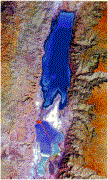 Jordan
has begun consultations with both the Palestinian and Israeli governments
to embark on feasibility studies for the Red-Dead Canal project, according
to Water and Irrigation Minister Hazem Nasser. On the Jordan TV programme
“60 Minutes,” the minister said studies would begin “in the coming
months.” The issue received world support when discussed during meetings
of the World Economic Forum, held at the Dead Sea earlier in the year. The
World Bank prepared terms of reference, which were discussed trilaterally
between the three governments for the first time at the conference. The
ambitious project is designed to save the Dead Sea from an imminent
environmental catastrophe. Jordan
has begun consultations with both the Palestinian and Israeli governments
to embark on feasibility studies for the Red-Dead Canal project, according
to Water and Irrigation Minister Hazem Nasser. On the Jordan TV programme
“60 Minutes,” the minister said studies would begin “in the coming
months.” The issue received world support when discussed during meetings
of the World Economic Forum, held at the Dead Sea earlier in the year. The
World Bank prepared terms of reference, which were discussed trilaterally
between the three governments for the first time at the conference. The
ambitious project is designed to save the Dead Sea from an imminent
environmental catastrophe.
Nasser
also outlined the country's position on other mega-water projects during
the programme. The ministry has received two “technical and financial”
bids for the JD420 million ($591.5 million) Disi project from two
international consortiums, he said, describing the development as “very
good.” “In the next few months, we will announce the name of the
company that will undertake the project,” he said. The Disi project is
designed to convey water from the aquifer to the capital, which suffers a
water shortage, particularly in the summer.
2nd
EU-Jordan Association Council to be held in Luxembourg
 The
Second EU-Jordan Association Council will take place on October 14th,
2003 in Luxembourg. Foreign Minister Dr. Marwan Muasher will lead the
Jordanian Delegation. External Relations Commissioner Chris Patten will
represent the European Commission. The main focus will be on the state of
play of the implementation of the Association Agreement. Within Political
Dialogue a number of issues will be discussed, including the situation in
the Middle East, Iraq, the democratic process in Jordan after the recent
general elections, the link between the Barcelona Process and the “Wider
Europe” Initiative, and the Agadir Process of sub-regional integration. The
Second EU-Jordan Association Council will take place on October 14th,
2003 in Luxembourg. Foreign Minister Dr. Marwan Muasher will lead the
Jordanian Delegation. External Relations Commissioner Chris Patten will
represent the European Commission. The main focus will be on the state of
play of the implementation of the Association Agreement. Within Political
Dialogue a number of issues will be discussed, including the situation in
the Middle East, Iraq, the democratic process in Jordan after the recent
general elections, the link between the Barcelona Process and the “Wider
Europe” Initiative, and the Agadir Process of sub-regional integration.
Up
coming Events
 Jordan Economic Forum.
12-13 October 2003
“Jordan
SAWSANA 2003", 21 - 24 October 2003
American Jordanian Expo
2003, 22 – 23 October 2003
SOFEX 2004, 26 – 29
April 2003
Jordan Economic Forum.
12-13 October 2003
“Jordan
SAWSANA 2003", 21 - 24 October 2003
American Jordanian Expo
2003, 22 – 23 October 2003
SOFEX 2004, 26 – 29
April 2003
|
GDP
growth rises to 4.7% at current market prices during 2nd
quarter
Gross
domestic product (GDP) registered a 3% growth at constant market prices
during the 2nd quarter of this year compared to 2.8% during the
1st quarter of this year. During the 2nd quarter of
2002 and 2001, the GDP growth was 5.6% and 4.7% respectively. The growth
at current market prices was, however, 4.7% indicating a 1.7% rise in the
GDP deflator that reflects the level of general price increases in the
economy. GDP growth at current market prices during the 1st
quarter of this year was 3.9%.
Key
sectors behind the growth achieved were those of the manufacturing
industries, construction, wholesale and retail trade, transport and
storage as well as telecommunications. Moderate growth was recorded in the
private and public services sector.
Imports
rise 15.7 per cent to JD1.86b in 6 months
Imports
rose 15.7% to JD1.86 billion ($2.618 billion) in the first half of this
year, the Department of Statistics said in a report released in September
2003. It said Germany topped the list of 118 countries selling goods to
Jordan, exporting merchandise — mainly vehicles and heavy machinery —
worth JD143.7 million ($202.4 million). Imports from Germany, however,
were 3.8% less than in the corresponding period in 2002, the report
indicated. It said China ranked second, exporting to Jordan goods worth
JD141.3 million ($199 million) — nearly 60% more than the same period
last year.
Iraq,
Jordan's close business associate and sole oil supplier until the US-led
war erupted in March, came third, the report said. It pointed out that
imports from Iraq — mainly crude and fuel oil — reached JD140.3
million ($197.6 million), a 36.5% decline from the same period in 2002.
Saudi Arabia was the fourth largest exporter, sending mainly foodstuff and
oil valued at JD136.3 million ($191.9 million), followed by the United
States, with exports of mainly wheat, vehicles, foodstuffs and machinery
amounting to JD134.1 million ($188.8 million).
Britain,
Italy, Japan, Syria and France rounded out the top 10 of importers.
Jordan's imports also include barley, livestock, steel, timber, paper,
plastic products, electronics and electrical appliances, computers,
furniture and pharmaceuticals.
AJEX
2003 attracts major Int’l companies and associations
 AJEX
2003 is attracting leading International public and private organizations
to participate in the two-day event in Amman from October 22-23, 2003. The
conference aims to promote trade and investment between the US, Jordan and
the region. The US Importers Association, the Arab American Institute and
the American State Offices Association, as well as member of the US
government Department of State and Department of Commerce are some of the
organizations that have been confirmed to attend and speak at AJEX 2003.
The Coalition Provisional Authority (CPA) and other regional US Chamber of
Commerce, such as the Iraqi American Chamber of commerce will also be
present. AJEX
2003 is attracting leading International public and private organizations
to participate in the two-day event in Amman from October 22-23, 2003. The
conference aims to promote trade and investment between the US, Jordan and
the region. The US Importers Association, the Arab American Institute and
the American State Offices Association, as well as member of the US
government Department of State and Department of Commerce are some of the
organizations that have been confirmed to attend and speak at AJEX 2003.
The Coalition Provisional Authority (CPA) and other regional US Chamber of
Commerce, such as the Iraqi American Chamber of commerce will also be
present.
Other
US organizations participating in AJEX 2003 include private sector
companies already operating in Jordan and Iraq, as well as their regional
representatives in the Middle East. For more information and registration,
please log into http://www.ajex.org
or E-mail: [email protected]
Date:
Oct
22 - Oct 23, 2003
Location:
Grand Hyatt Amman, Jordan
Specifics:
The two-day conference will include panel discussions during the
morning session from global leaders and experts who will interactively
discuss trade and investment mechanisms and issues for the benefit of
over 500 delegates from all over the globe that include Jordanian,
American and international exporters, importers, service providers and
investor.
Coordination By:
The American Chamber of Commerce in Jordan (JABA)
Contact:
P.O.Box 840817
Amman 11184 - Jordan
Tel. (962 6) 465 3857
Fax. (962 6) 465 3862
http://www.ajex.org/
E-mail:
[email protected]
Kempinski
to manage new Dead Sea resort
Germany’s
Kempinski Hotels & Resorts has signed the management contract for a
leisure resort in Jordan, owned by the United Saudi Jordanian Hotels &
Tourism Company, which is due to open towards the end of 2004. The resort,
now under construction, is situated 50 kilometers west of the country's
capital, Amman, on a 25-acre site, with direct access to the shores of the
Dead Sea. The Kempinski Ishtar Resort Hotel & Spa will comprise three
sections. The Royal Wing will house two VIP Royal Villas and Suite
clusters totalling 44 large units. The Resort Wing will offer 90 Executive
Club Rooms and Suites, while the Central Pavilion will include restaurants
and theme bars with live entertainment and private dining rooms.
JPMC
made $5.3 million in net profits
The
Jordan Phosphate Mines Co (JPMC) made JD 3.8 million ($5.3 million) in net
profits for the first half of 2003, tripling its profits for the same
period of 2002. During the same period, the company, however, witnessed a
gradual decline in its sales, reaching JD 93.1 million ($131.12 million)
compared to JD 100 million ($140.8 million) in 2002. JPMC’s financial
statement for 2003 indicated that the war on Iraq has affected the
company’s foreign exports, in which many shipments were delayed or
cancelled. Another factor was the hold-up of India’s imports of
Jordanian fertilizers during the first half, due to financial reasons on
the Indian part. India is a top importer of Jordanian fertilizers.
Aqaba-Sharm
El Sheikh Maritime Route begun Operating
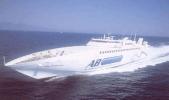 A new maritime route shuttling tourists between Jordan's southern port
city of Aqaba and the Egyptian tourist resort of Sharm El Sheikh should be
in full swing at the end of August 2003.
Transport Ministry Secretary General Alaa Batayneh said the newly
purchased $18 million Italian-made vessel, "Princess," would
begin her biweekly cruises between the two tourist resorts on Aug. 29.
"These trips will be organized every Sunday and Thursday,
providing tourists on both sides a way to shuttle back and forth between
the resorts aboard a 35-knot Italian yacht," said Batayneh. A new maritime route shuttling tourists between Jordan's southern port
city of Aqaba and the Egyptian tourist resort of Sharm El Sheikh should be
in full swing at the end of August 2003.
Transport Ministry Secretary General Alaa Batayneh said the newly
purchased $18 million Italian-made vessel, "Princess," would
begin her biweekly cruises between the two tourist resorts on Aug. 29.
"These trips will be organized every Sunday and Thursday,
providing tourists on both sides a way to shuttle back and forth between
the resorts aboard a 35-knot Italian yacht," said Batayneh.
The transport official said the craft,
operated by the Arab Bridge Maritime Company, has a 656-passenger capacity
and space for 58 cars. Plans are in the works to exempt Jordanian vehicles
transiting Egypt's Sinai Peninsula from fees if the stay does not exceed
15 days. Currently the only maritime link between Jordan and Egypt is one
to Nuweibeh, primarily used for trade exchanges between the two neighbors.
The initiative, undertaken by Arab Bridge
Maritime Company (a state-firm jointly owned by the governments of Jordan,
Egypt and Iraq), also has plans for extensions to the Egyptian seaports of
Al Ghardaga and Safaja. Other initiatives to boost two-way tourism include
establishing a small port at the Egyptian resort city of Taba, providing a
link to Aqaba's port just 10 kilometers away.
FEATURED
LINK

The
Jordan Tourism Board was officially launched in March 1998 as an
independent public – private sector partnership committed to utilize
marketing strategies to brand, position and promote the Jordan tourism
product internationally as the destination of choice. The adopted
strategies are tuned to reflect the true image of the Jordan product being
a cultural, natural, religious and MICE destination.
As
part of its marketing plan, the JTB plans and executes an integrated
program of international promotional activities. This program includes
representations, trade fairs, workshops and road shows, familiarization
trips, brochure production and distribution and media relations.
Underlining
the importance attached to tourism, the 13- member Board of Directors is
headed by the Minister of Tourism and includes 9 private sector members
representing hotels, incoming tour operators and tourism transport
companies.
Jordan Tourism Board
P.O.Box: 830688
Amman 11183 Jordan
Tel: ++ 962 6
5678294
Fax: ++ 962 6 5678295
Email: [email protected]
Website: www.see-jordan.com
Jordan
at Glance
Ruling
Regime:
Constitutional
monarchy with representative government, freely elected
parliament and independent Judiciary.
Location:
Jordan
is situated between latitudes 29 and 33 north and longitudes 34
and 39 east.
Population:
Estimated at 5.33 million inhabitants in 2002.
Area:
89.300
square km, of which 7.8 % is agricultural land.
Climate:
Hot and dry in summer, rainy in winter.
Timing:
Two hours and three hours ahead of Greenwich timing, in
winter and summer respectively.
Language:
Arabic,
English is widely spoken particularly in business.
Economic
System:
Market
oriented economy.
Size
of Economy:
GDP
in 2002 is estimated at JD 6591 million or US$ 9296 million.
Standard
of Living:
Per
capita GDP at current market prices equals JD 1237 or US$ 1745
in 2002.
Currency:
Jordan
Dinar, which equals US$ 1.41, is fully convertible.
Resources:
·
Several
natural resources; phosphate and potash are the most important
ones
·
Abundant
skilled human resources and several tourism sights
|
For
further information about doing business in Jordan, you may contact Mr.
Haitham Abu Alfoul at the Embassy, phone +49 30-36 99 6033 fax +49 30-36
99 6011, [email protected].
Large part of the Newsletter is reprinted from the Jordan Times
|